Step into the heart of any Moroccan old city, and you will find its vibrant, beating heart: the souk. Far more than just a place to shop, a souk is a dazzling labyrinth of culture, history, and craftsmanship. Prepare to discover the magic of Morocco’s souks, from their ancient history to the art of navigating their vibrant alleyways like a seasoned expert.
What is a Souk? More Than Just a Market
In its simplest terms, a souk is an open-air marketplace, a tradition deeply woven into the fabric of life in North Africa and the Middle East. But to leave the definition there would be to miss its soul. Historically, the souk was the city’s commercial and social epicenter, a bustling hub where desert caravans would arrive laden with goods, and locals would gather to trade, socialize, and catch up on the day’s news.
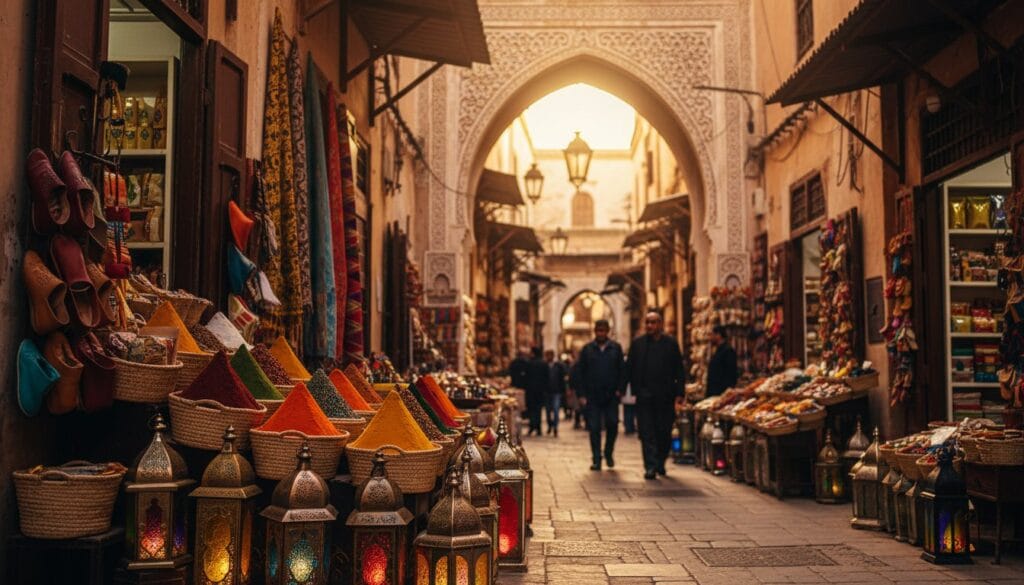
You will almost always find the souk located within the ancient walled part of the city, known as the ‘medina’. These markets are not random collections of stalls but are traditionally organized into sections based on the craft. You might wander through the spice souk, with its pyramids of colorful powders, before finding yourself in the lane of the leatherworkers or the glittering alley of the metal lantern makers. This ancient organization still exists today, making exploration a journey of discovery through different artisanal worlds.
A Feast for the Senses: What to Expect in a Moroccan Souk
Visiting a souk is an immersive experience that engages all your senses. The sights are a kaleidoscope of brilliant colors—from the rich jewel tones of hand-woven Berber carpets and silky smooth tagine pots to the vibrant yellows, reds, and greens of spice mounds. Light filters through ornate metal lanterns, casting intricate patterns on the walls of the narrow alleyways.
The sounds are a unique symphony of life. You’ll hear the rhythmic tapping of a metalsmith’s hammer, the friendly banter of vendors, the distant call to prayer echoing from a minaret, and the gentle chaos of a crowd navigating the bustling lanes. The air itself is thick with enchanting aromas: the sweet scent of exotic perfumes and fresh mint, the earthy fragrance of rich leather, and the warm, inviting smell of spices and baking bread.
Treasures of the Souk: What to Buy in Morocco
The souks are a treasure trove of authentic, handcrafted goods that make for perfect souvenirs and timeless keepsakes. Knowing what to look for can help you find the most exceptional items:
- Handcrafted Leather Goods: Morocco is famous for its leather tanneries. Look for high-quality, hand-stitched items like traditional pointed slippers (babouches), stylish bags, and durable belts.
- Intricate Metal Lanterns: These beautiful lanterns, crafted from tin, brass, or silver, can transform any room with their delicate, patterned light.
- Aromatic Spices and Argan Oil: Bring the taste of Morocco home with you. Saffron, Ras el Hanout, and cumin are popular choices. Pure argan oil, known as “liquid gold,” is another must-have for culinary or cosmetic use.
- Berber Carpets and Pottery: Each Berber carpet tells a unique story through its symbols and colors. You can also find beautiful, hand-painted ceramics, including plates, bowls, and the iconic conical cooking vessel, the tagine.
The Art of Bartering: A Beginner’s Guide to Haggling
For many visitors, the idea of haggling can be intimidating, but in Morocco, it’s a friendly and expected part of the shopping experience. Think of it less as a confrontation and more as a respectful conversation. A good-natured smile and a positive attitude are your best tools. When a vendor gives you a price, it’s generally an opening offer.
A good rule of thumb is to politely counter with an offer of about half the initial asking price and work your way to a mutually agreeable figure from there. Most importantly, never feel pressured. If you can’t agree on a price you’re comfortable with, it is perfectly acceptable to thank the vendor for their time and politely walk away. The key is to enjoy the interaction and have fun with it.
Navigate the Souk in Style with a Private Guide
While getting lost in the winding alleys of the souk is part of the adventure, doing so with an expert local guide transforms the experience from overwhelming to enchanting. A private guide can lead you effortlessly through the maze, steering you away from tourist traps and towards the hidden workshops of the finest local artisans, whose crafts have been passed down through generations.
A guide not only shares the stories behind the goods but also assists with respectful and fair negotiation, ensuring you find authentic treasures at a fair price. It’s the difference between merely visiting and truly connecting with the culture. Turn a potentially overwhelming visit into a curated adventure. Experience the souk’s magic, effortlessly, on a private tour.
Frequently Asked Questions About Moroccan Souks
What is the difference between a souk and a medina?
The medina is the historic, walled old city, characterized by its narrow, maze-like streets. The souk is the commercial market area located within the medina.
Are souks safe for tourists?
Yes, souks are generally very safe. Like any crowded area, it’s wise to be aware of your surroundings and keep your belongings secure. Traveling with a private guide adds an extra layer of comfort and security.
What is the best time of day to visit a souk?
Late morning (around 10 AM) and late afternoon (after 4 PM) are often the best times. The souk is fully awake and bustling, but you can avoid the intense midday heat.
Do vendors in the souk accept credit cards?
Most smaller stalls and individual artisans operate on a cash-only basis. While some larger shops may accept credit cards, it’s essential to carry enough Moroccan Dirhams for your purchases.
What should I wear when visiting a Moroccan souk?
Comfort is key. Wear comfortable walking shoes as you’ll be on your feet for a while. It’s also recommended to dress modestly out of respect for the local culture—covering your shoulders and knees is a good guideline.
A visit to a Moroccan souk is an unforgettable journey into a world of vibrant color, rich history, and exquisite craftsmanship. It’s a place to connect with the local culture, discover unique treasures, and create lasting memories. When you’re ready to immerse yourself in this enchanting experience with the comfort and elegance you deserve, let us show you the way. Design your unforgettable Moroccan journey today.